AI visibility · Study
The more Google reviews, the more often AI assistants name a local business
We asked four AI assistants 1,728 everyday questions about bakeries, dentists, plumbers and more in six Swiss cities. Here is how often they named 276 independent local businesses, who they named instead — and what the businesses they name have in common.
When somebody asks an AI assistant for a good bakery or an affordable dentist, which businesses does it name? We measure it every month. For October we asked ChatGPT, Gemini, Claude and Perplexity 1,728 questions, the way a person would type them, and checked every answer against a fixed panel of 276 small, independent businesses in six Swiss cities. Then we looked at what the businesses they name have in common.
-
41%
of the 276 panel businesses were never named by any of the four assistants all month
-
1.7×
as often named: the half of a city and trade with more Google reviews, against the other half
-
52%
of the times a panel business was named for "who is the best?", only someone else's page had it: a guide, a ranking, a directory
How we measure it
The panel: 276 independent businesses with a website of their own — up to eight bakeries, dentists, hair salons, plumbers, vets and garages in each of Zurich, Basel, Bern, Geneva, Lausanne and Lugano. 175 were drawn at random from OpenStreetMap. Where a city had too few of a trade with a website, we looked up the website of places OpenStreetMap lists without one (47) and found the rest on search.ch, local.ch and trade associations' lists (54). Chains are left out.
The questions: four per trade, in the city's language and without naming any business — "What is the best bakery in Lausanne?", "My tooth hurts really badly. Who should I see in Bern?", "Which plumbers in Lugano offer 24/7 emergency service?", "Where can I find an affordable dentist in Zurich if I don't have dental insurance?". Each was asked of each assistant three times, through its API with web search on, on 1 October 2026. So every panel business had 48 chances to be named.
To see what the named businesses have in common, we added 428 more independents from OpenStreetMap that were not drawn into the panel, and collected for all of them their Google reviews, what their websites say and how they are built, and every page the answers cited, read again to see who is on it.
Four in ten businesses were never named
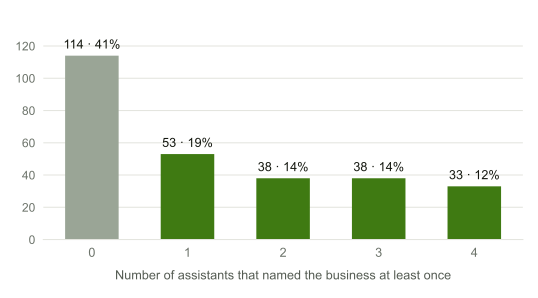
114 of the 276 businesses (41%) did not appear in a single answer. Only 33 (12%) were named by all four assistants. And more than half of the answers (56%) named none of the panel businesses in their city and trade at all.
Gemini names the most, Perplexity the fewest
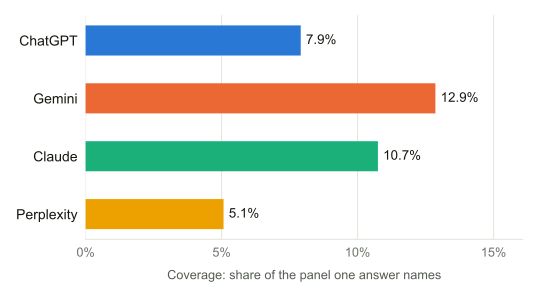
On average, one answer from Gemini named 12.9% of the panel businesses in its city and trade, Claude 10.7%, ChatGPT 7.9% and Perplexity 5.1%. The order follows the length of the lists: Claude names 7.4 businesses per answer, Gemini 6.8, ChatGPT 4.4 and Perplexity 2.9. Of everyone each assistant named, between 11% and 15% were panel businesses — about the same for all four. A shorter answer does not favour small businesses; it leaves more of them out.
The trade and the city: mostly the size of the market
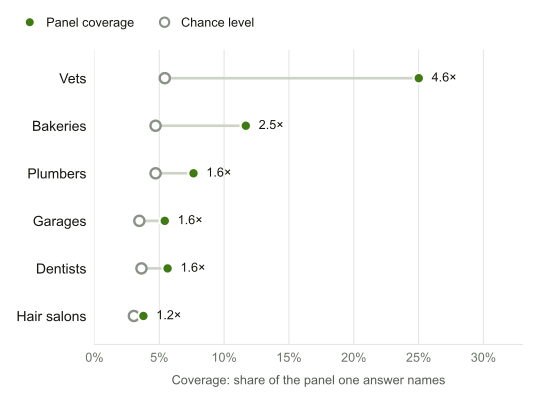
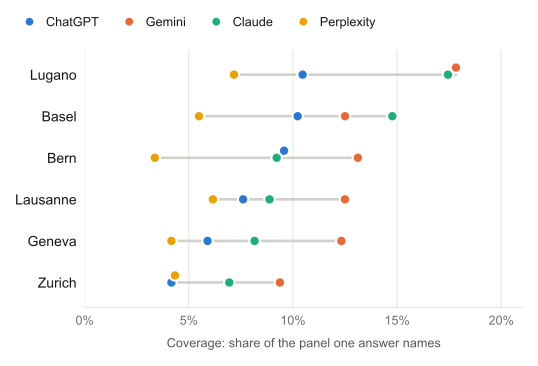
Vets are named most: 24.6% coverage, and 89% of the panel's vets were named at least once. Hair salons are named least, at 3.8%, with more than six in ten never named. Lugano, the smallest of the six cities, is the most visible (13.2%); Zurich, the largest, the least (6.2%), and not one of its eight panel dentists was named in 48 answers.
Much of this is arithmetic. An answer names three to seven businesses, whatever the city and trade. Zurich has 564 hair salons in OpenStreetMap: picked at random, each would be in about 1% of the answers. Basel has a few dozen vets: each would be in about 6%. Measured against that chance level, the panel is named about two and a half times as often as a business picked at random from its market — vets 4.6 times, bakeries 2.5 times, hair salons 1.2 times — and every city lands between 1.8 times (Zurich) and 2.8 times (Basel). Rankings of trades and cities are, to a large part, rankings of how crowded the market is.
Who gets named is not random
If each assistant picked its names independently — given only the city, the trade and how many names it gives — about 18 panel businesses would have been named by all four, and 80 by none. In fact 33 were named by all four and 114 by none. The four assistants agree on whom to name and whom to leave out, and they agree from one asking to the next: 142 of the 162 panel businesses named on 1 October had also been named the day before, when the same questions were asked for the first time.
What the named businesses have in common
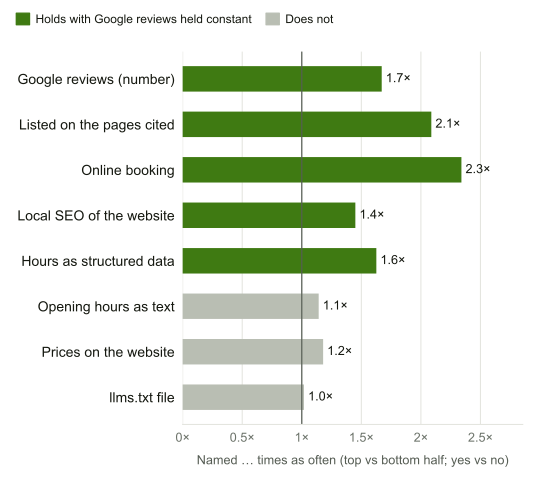
We compared every business only with others of the same trade in the same city, so market size drops out. The strongest signal is prominence on other sites:
- Google reviews. The half of a city and trade with more reviews was named 1.7 times as often as the other half, and 3.1 times as likely to be named in six answers or more. It holds for all four assistants and every kind of question.
- Being on the pages the assistants cite. Businesses listed on local.ch and search.ch pages, local guides and media, and booking platforms that the answers cite were named 2.1 times as often — also with the number of reviews held constant.
The business's own website matters too, but not in the way that is usually recommended:
- Basic local SEO goes with being named: the city and the trade in the page title, a meta description, structured data for the business and its opening hours, an FAQ. The half of the businesses that do more of this were named 1.4 times as often, with reviews held constant.
- Online booking — in practice, salons and dentists with a profile on a booking platform — goes with being named 2.3 times as often.
- Opening hours and prices written as text made no difference (1.1 and 1.2 times, not significant), and neither did an llms.txt file.
Together, prominence and the website explain a little over half of why the four assistants agree. The rest is what the models know without searching, and what these measures do not capture. It is correlation in one month's answers, not proof of cause: businesses with many reviews tend to be busier in every way.
Where the names come from
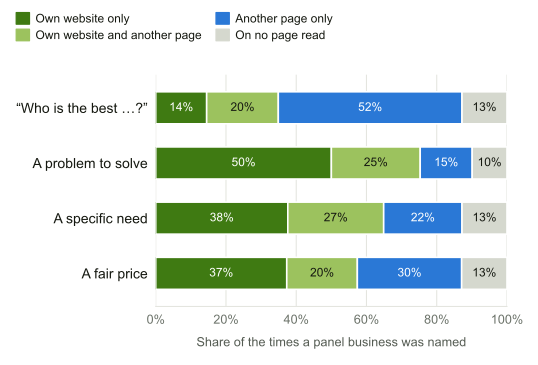
When an assistant named a panel business, its own website was among the pages the assistant read 55% of the time — found through an ordinary web search for the question, rarely by searching for the business's name. Which page counts depends on the question. For a problem — a toothache, a leak, a cake by Saturday — the business's own site was the only page with it in half of the cases, often an inner page that answers the question, such as an emergency page or a cake order page. For "who is the best …?", in 52% of the cases only someone else's page had the business: a guide, a ranking, a directory.
A toothache gets fewer names than "the best dentist"
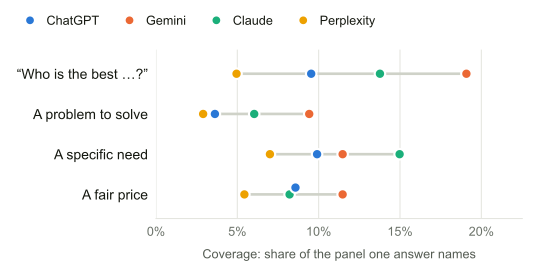
The kind of question also changes how many small businesses get named. Questions about a problem gave the lowest coverage for every assistant, from 2.9% to 9.4%. For those, the assistants point to emergency services and big providers: the touring club TCS for a car problem, in 55 of the 72 answers, the dental emergency services and university clinics for a toothache, the city utilities for a leak.
Who gets named instead
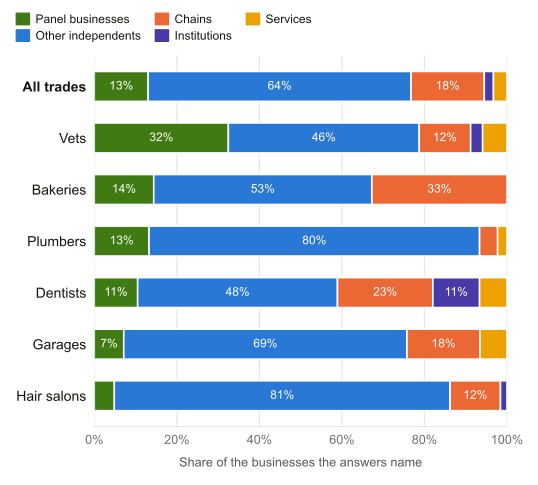
The most visible businesses of the panel are institutions rather than shops: the university animal hospital in Zurich, named in 92% of the answers about vets there, and the university dental centres in Basel and Geneva. Outside the panel, the names that come back from city to city are chains and big brands: TCS for garages, Migros and Coop for bakeries, the dealer groups Emil Frey and AMAG, the hairdresser chain Gidor.
Counted over everyone the assistants named, 18% were chains — several branches under one name — and 13% panel businesses; 64% were other independent businesses, the rest institutions and services such as emergency lines. Chains weigh most where people shop every day: a third of the bakeries named are chains, and almost a quarter of the dentists. Among plumbers they are 4%.
Own websites first, directories close behind
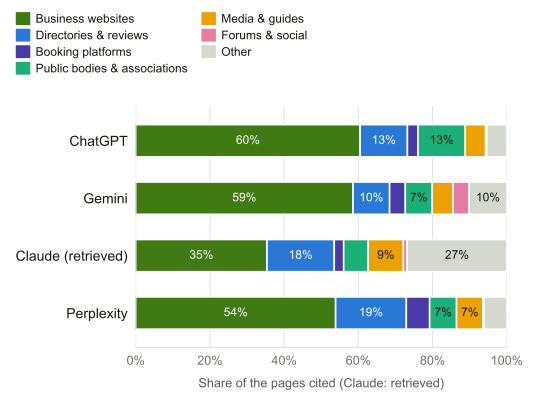
When the assistants show their sources, most of the pages they cite are businesses' own websites: 54% of the pages Perplexity cites, 59% for Gemini and 60% for ChatGPT. Directories, review and comparison sites make up 10% to 19% of the pages, yet they appear in four in ten of the answers that cite anything — local.ch alone in 30%, the most cited single site by far. Booking platforms such as Treatwell and Salonkee add 3% to 6%; public bodies and associations — the dentists' association, the touring club, the universities — 7% to 13%. Claude cites almost nothing, because it reads its search results through code before it writes; of the pages its searches returned, 35% were businesses' websites and 18% directories.
Ask twice, get a different list
The same questions had been asked once before, in a first run the day before, on 30 September. Fewer than half of the businesses named in a city and trade were the same in both runs. Yet each assistant's overall figure barely moved — Gemini 12.7% then 12.9%, ChatGPT 7.5% then 7.9% — and who gets named at all hardly changed. What varies from one asking to the next is the rest of the list. A single answer, which is what a customer sees, is close to a lottery; whether a business is in the draw at all is not.
What a local business can do
- Collect Google reviews. It is the strongest single signal of being named, for every assistant.
- Get onto the lists the assistants read. Local guides and media ("the best bakeries in Basel"), local.ch and search.ch, and the booking platforms of your trade. Having a listing is not enough — nearly every business has one on local.ch — what counts is appearing on the pages that rank, and that follows reviews.
- Do the basics of local SEO on your website. Your city and trade in the page title, a meta description, structured data for your business and its opening hours, an FAQ, and a page for each service people ask about — an emergency service, a cake to order. The assistants find businesses' pages through ordinary web search, and for a problem they cite the page that answers it.
- Check where you stand, more than once. Our free ChatGPT visibility check shows in a minute whether ChatGPT names your site. Since answers vary, check again over time.
The full figures — every city and trade, the comparison with chance, what the named businesses have in common, the most visible businesses, the names outside the panel and the method — are in the October report (PDF). The next run is on 1 November.
The data behind it — every panel business's visibility, the comparison with chance and every test of what goes with being named — is published as CSV files, listed and described in the data file.
Updated on 10 October 2026: we added the comparison with chance, what the named businesses have in common and where the names come from, corrected how the panel was made (not all of it was drawn at random), and replaced the advice to write opening hours and prices as text, which the data does not support.
Sources
- SMB AI visibility study, October 2026 (PDF) — Quaryan, 10 October 2026
- SMB AI visibility study, October 2026: the data (CSV) — Quaryan, 10 October 2026
- OpenStreetMap — the panel's businesses, drawn on 30 September 2026